Understandably, most small businesses will resist neighbourhood changes that might reduce trade – and that’s how you’d expect the traders might have reacted when Port Phillip Council said it would cut the number of on-street car parks in Acland St, St Kilda.
But instead, the Acland St traders they did some research. What they found was more than a surprise: it actually transformed the traders association into one of the strongest supporters of the change.
The traders quickly discovered that more than half of all their customers walked to Acland St to shop – and only around a quarter drove. More than that, though: more than half the shoppers in the area lived locally, and locals made an average of 184 visits to the shopping precinct every year. In fact, almost a quarter of the people surveyed said that they shopped in Acland St every day.
The traders quickly realised that removing car spaces would only affect around a quarter of their customers (and at least some of those would return on other forms of transport, anyway).
But more importantly, they recognised that their largest and most loyal customer group was actually local. Improving the walking environment for them was likely to actually increase their loyalty and might help attract them back to the area more often – which would translate into a bonus for local business.
So thanks to the traders’ open-mindedness and willingness to listen, Acland St is more walking-friendly than it ever was, and everyone has benefited.
What the Acland Street provides is a great example of what can be achieved if the community works together! How can you work with your local traders and businesses to make your neighbourhood better for walking?
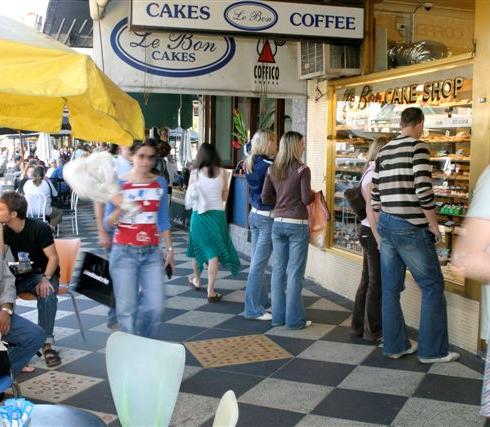 The once narrow footpaths of Acland Street are now wide, vibrant and social pedestrian spaces.
Other studies showing walkers are good for local business and the economy
Acland Street traders are not alone in recognising that pedestrians are good for local business. See our page on the economic benefits of walking for a broad range of evidence.