Walking and Transport in Melbourne 2025 Update
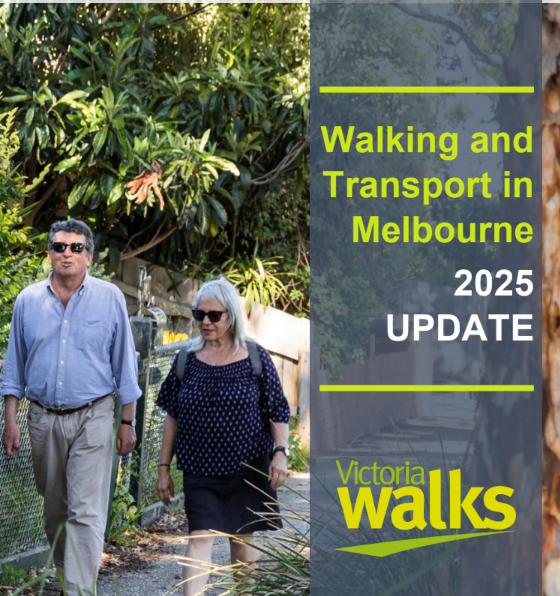
New Victoria Walks analysis of Victorian travel data shows walking remains a major part of Melbourne’s transport mix — but post-COVID travel patterns are shifting in concerning ways.
At a glance
Walking accounts for around 16% of weekday trips in metropolitan Melbourne — about one in six trips. Driving dominates travel, with 54% of trips as vehicle driver and 22% as passenger, while public transport accounts for 6%. Since the end of COVID restrictions, walking levels have fallen while driving is at its highest level in a decade. Average walking trip distance has dropped by nearly 30%, from 820 metres pre-COVID to 586 metres. For trips under one kilometre, walking remains the most common mode (57%).
Why this matters
More trips are being made across Melbourne, but the increase is largely in private vehicle travel rather than walking or public transport. This has implications for public health, congestion, emissions and local accessibility, and highlights the importance of investing in walkable neighbourhoods.
What’s in the report
This update analyses weekday travel in metropolitan Melbourne using the Victorian Government’s travel survey data. It examines changes in mode share over time, how far people walk across inner, middle and outer Melbourne, and the reasons people walk, including recreation, shopping and personal business.
About the data
This report is based on the Victorian Integrated Survey of Travel and Activity (VISTA) — the Victorian Government’s ongoing household travel survey. VISTA collects detailed information from thousands of households on how, why and how far people travel each day, including trips made by walking, driving and public transport.
Download the report
Walking and Transport in Melbourne 2025
Keep in touch
Want to hear more about Victoria Walks activities and other news in the world of walkability?
Sign up to our quarterly newsletter for professionals here (scroll to bottom of page)